
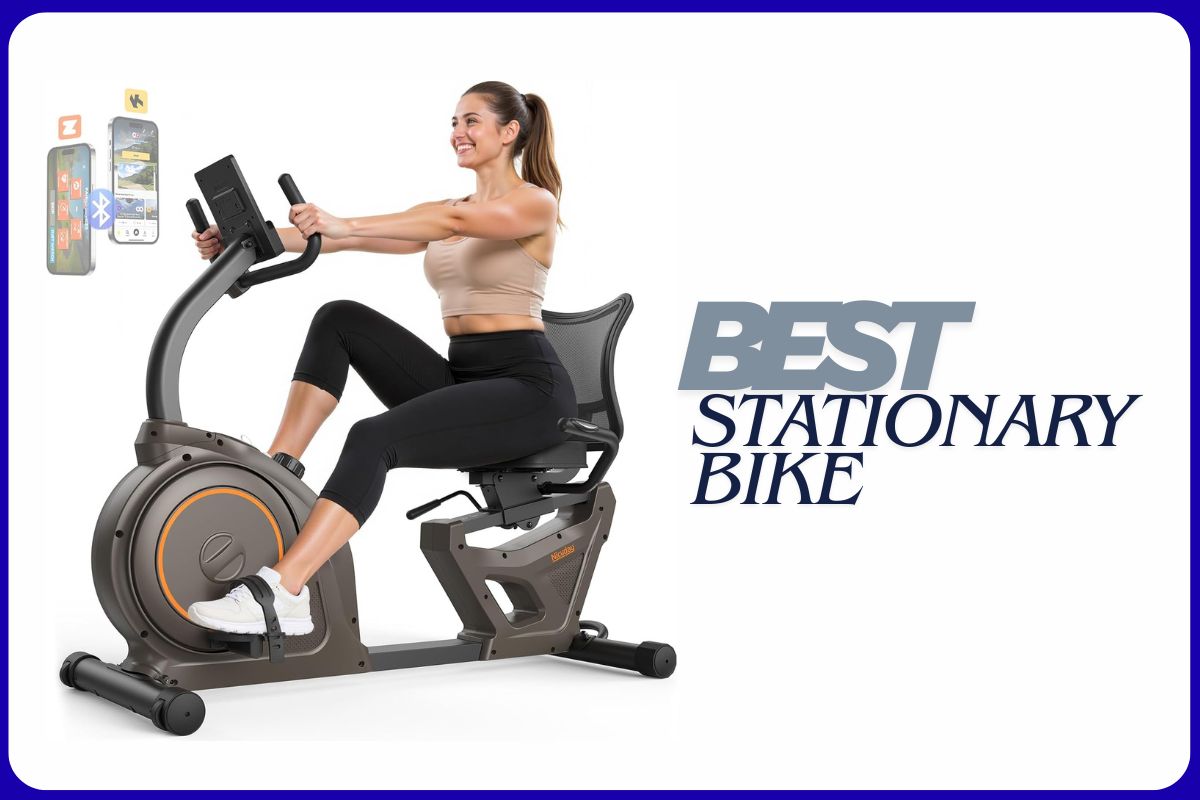

If your knees ache every time you try to exercise, a stationary bike might be the only cardio machine that won’t make things worse. Seriously. According to the Arthritis Foundation, cycling is one of the top-recommended low-impact exercises for people with knee arthritis because it moves the joint through its range of motion without pounding it into the ground.
But not every stationary bike works for bad knees. Seat height, pedal position, backrest support, and resistance type all change how much stress hits your knee joint per rotation. Choose the wrong one and you’ve spent $600 to create a very expensive coat rack.
This guide covers exactly what seniors with bad knees should look for, which bike types actually help, and the specific models worth buying in 2026.
Why do stationary bikes help bad knees specifically?
Cycling reduces knee pain because it’s non-weight-bearing cardio. Your body weight stays on the seat, not your joints. The Arthritis Foundation notes that cycling strengthens the quadriceps (the muscles above your knee) without compressing the joint itself. Stronger quads mean better knee support over time.
A 2021 study published in the Journal of Rheumatology found that 12 weeks of stationary cycling reduced knee pain scores by about 25% in adults over 60 with knee osteoarthritis. That’s not a miracle cure. It’s consistent enough to matter.
Compare that to a treadmill, where every step sends 1.5 to 3 times your body weight through your knee. For a 160-pound person, that’s up to 480 pounds of force per step. Cycling sends close to zero.
What type of stationary bike is best for seniors with bad knees?
Recumbent bikes are the best option for most seniors with knee problems.
They have a reclined seat with back support, forward-positioned pedals, and a low step-through frame. All 3 of those features reduce knee strain compared to upright bikes. Your knee angle at the bottom of the pedal stroke stays gentler, and the backrest takes pressure off your lumbar spine too. That’s the best stationary bike for seniors with back problems as well, handled in one machine.
Upright bikes work fine for seniors with mild knee issues. But the riding position puts your knee at a sharper bend, especially at the top of the pedal stroke. For arthritic knees, that sharper angle gets uncomfortable fast.
Semi-recumbent (or “comfort”) bikes split the difference. Slightly reclined, step-through frame, but less back support than a full recumbent. They work. They’re just not as good.
What features should you look for in a stationary bike for arthritic knees?
Is the seat adjustable enough for your height?
Seat height matters more than most people realize. A seat that’s too low forces your knee into a deep bend at the top of the pedal stroke. That’s where most knee pain happens.
The right position: when your foot is at the bottom of the pedal stroke, your knee should have a slight bend (around 25 to 35 degrees). Your leg should nearly straighten, never fully lock out. If you can’t dial in this position, the bike is wrong for you.
Look for bikes with a seat adjustment range that covers your inseam with room to spare. Most quality recumbent bikes list a user height range of 5’0″ to 6’3″, which covers most seniors.
Does it have magnetic resistance?
Resistance type changes how smooth the pedaling feels. Magnetic resistance (where a magnet creates drag without physical contact) gives you a smooth, quiet, consistent pedal stroke. That smoothness reduces jerk forces on your knee joint.
Friction resistance (where a pad presses on a flywheel) is cheaper but creates a slightly uneven feel. Fine for most people. Worth avoiding if your knees are already sensitive.
Most bikes in the $250 to $650 range now use magnetic resistance. Below $200, friction resistance is common.
Is the step-through frame low enough?
Swinging your leg over a tall bike frame is genuinely difficult with bad knees or hip problems. Recumbent bikes almost universally have step-through or open frames. Upright bikes vary. Check the step-over height before buying, especially on Amazon, where photos can be deceiving about actual frame height.
Does it have pedal straps?
Foot straps keep your foot positioned correctly on the pedal. A foot that slides forward or backward changes your knee tracking with every rotation. Most bikes include adjustable straps. If they’re missing, that’s a red flag on a $400 machine.
Best stationary bikes for seniors with bad knees in 2026
Schwinn 230 recumbent bike (best overall)
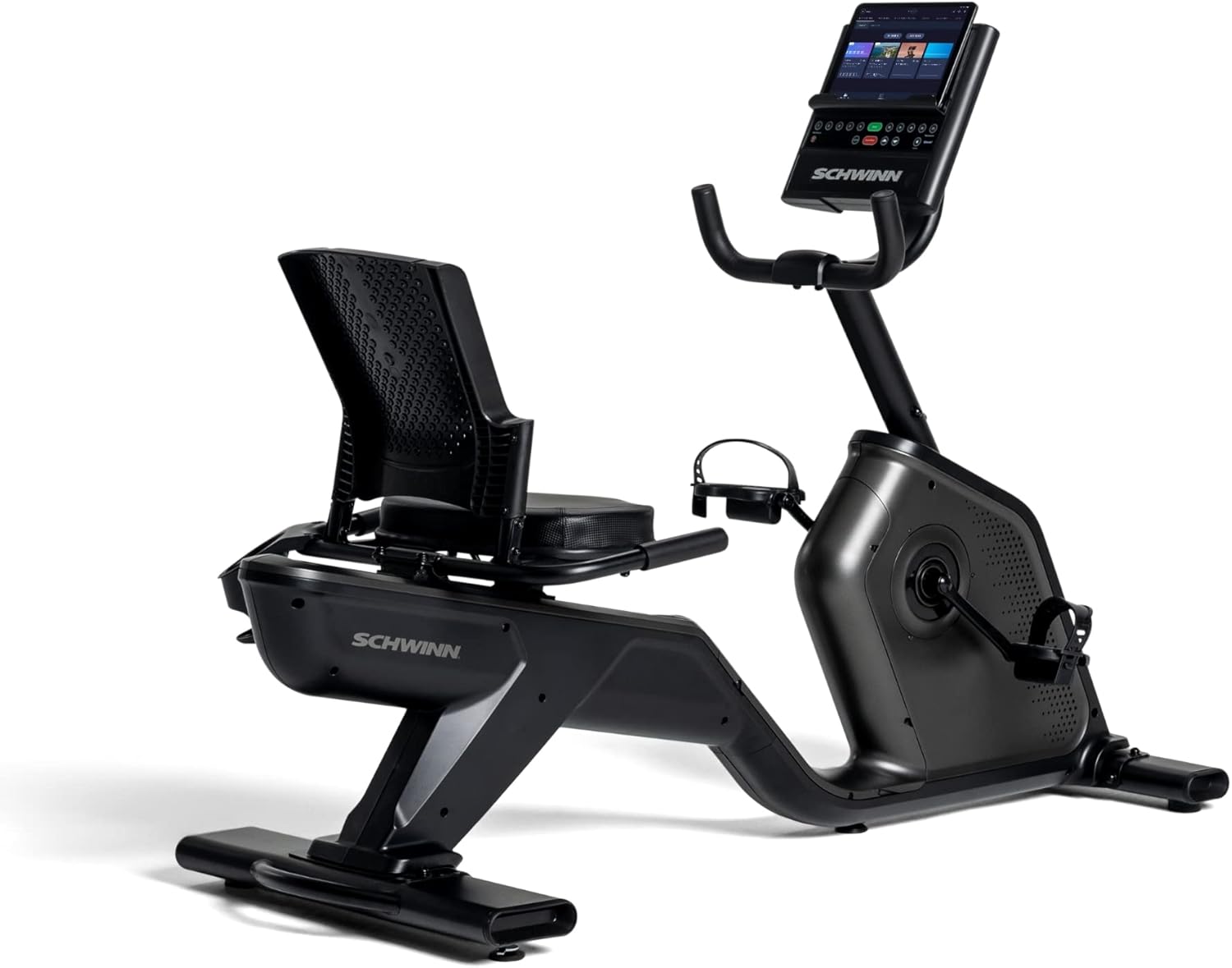
The Schwinn 230 consistently shows up in Consumer Reports-style roundups and fitness publications as the go-to recumbent for home use. It has 20 levels of magnetic resistance, a ventilated seat with lumbar support, and a step-through frame that sits about 8 inches off the ground. User height range covers 4’9″ to 6’3″.
It weighs 86 pounds (stable, doesn’t rock) and holds users up to 300 pounds. The console tracks heart rate via handlebar sensors. Price on Amazon typically runs $500 to $1000.
Exerpeutic 900XL recumbent bike (best budget pick)
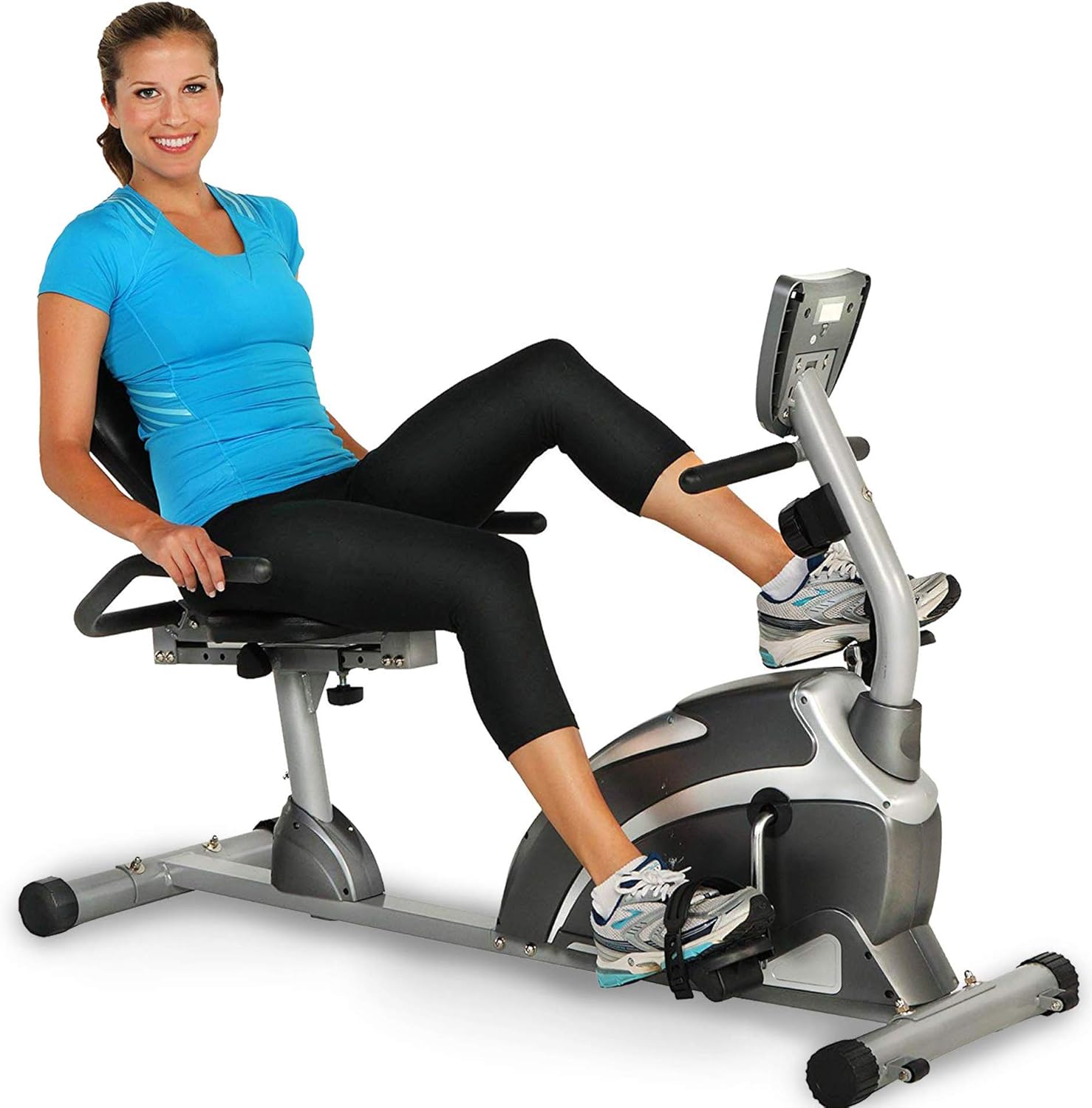
If $600 feels steep, the Exerpeutic 900XL sits around $200 to $650 on Amazon and does most of what the Schwinn does. 8 resistance levels, magnetic resistance, step-through frame, and a weight capacity of 300 pounds.
It’s not as smooth as the Schwinn at high resistance levels. But for 20 to 30 minutes of light-to-moderate cardio, it’s plenty. It’s one of the best-reviewed budget recumbent bikes you’ll find, with over 10,000 Amazon reviews and a consistent 4.3-star average.
Marcy ME-709 recumbent exercise bike (best for tight spaces)
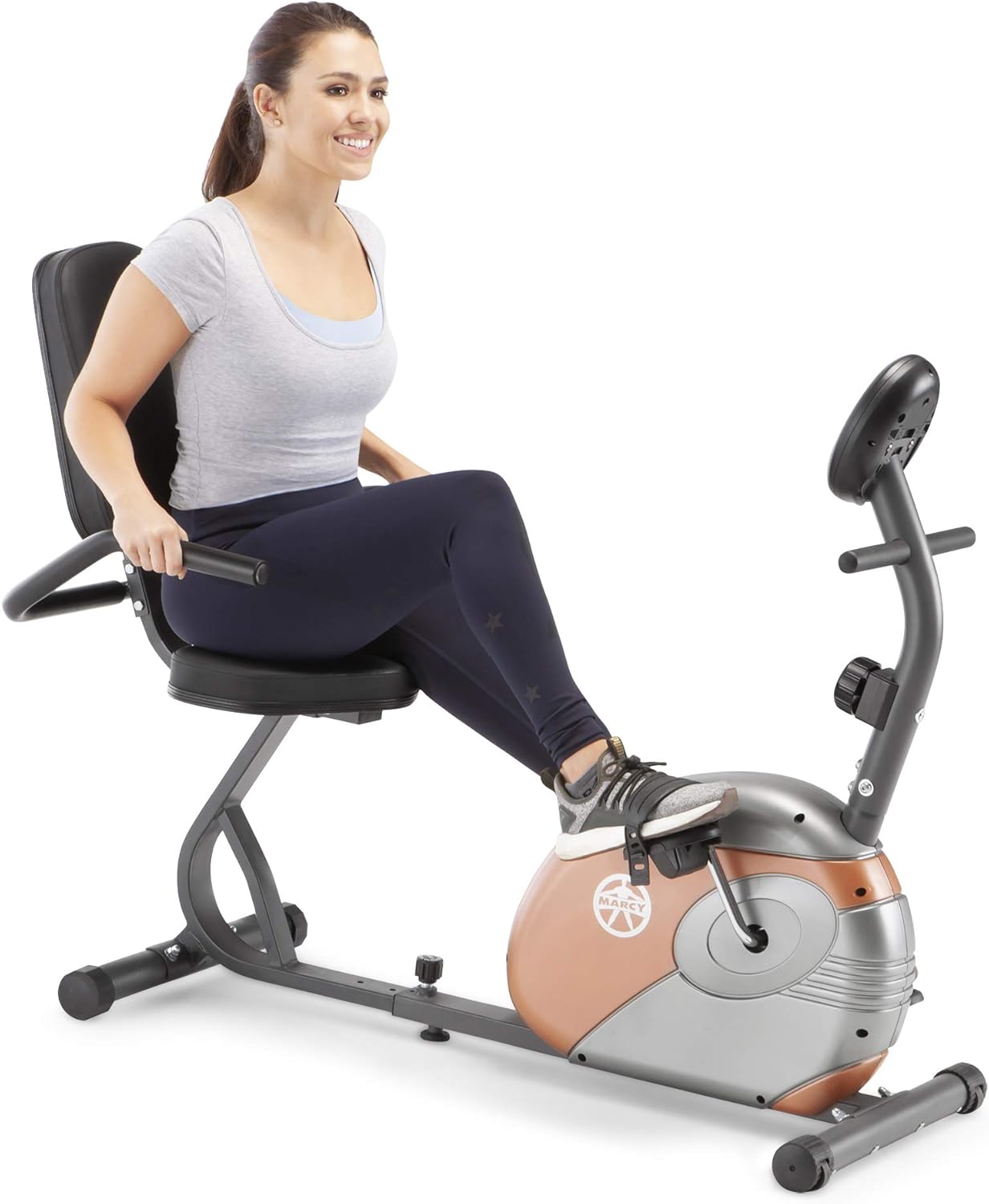
At 45 pounds and with a footprint of roughly 37″ x 19″, the Marcy ME-709 is the smallest full recumbent bike worth recommending. Price sits around $180 to $700.
It has 8 resistance levels, adjustable seat, and a step-through frame. It’s not built for heavy daily use. For a 70-year-old riding 15 to 20 minutes 3 times a week, it’s completely adequate.
Niceday recumbent exercise bike (best for heavier users)
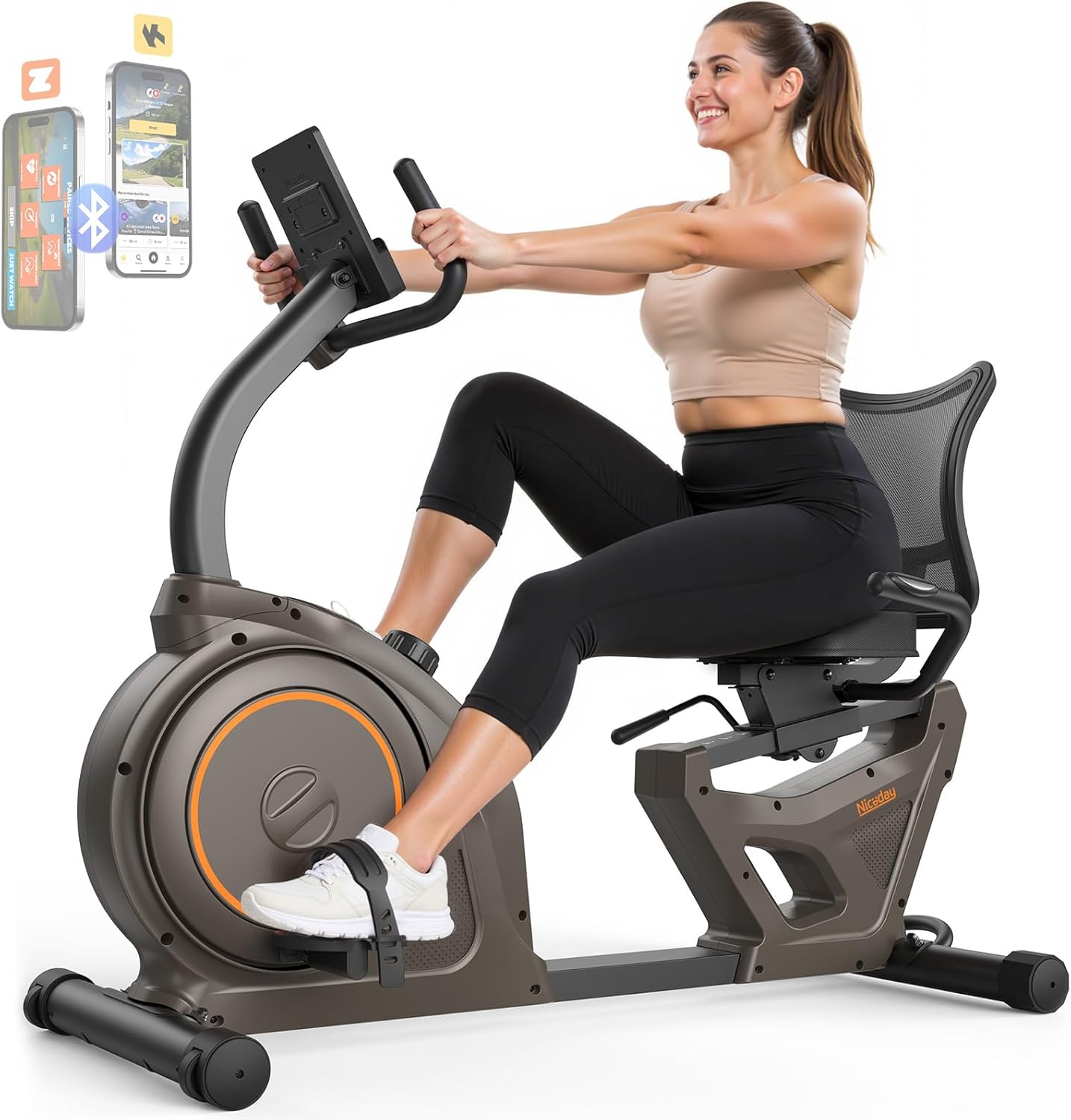
For seniors over 250 pounds who also have bad knees, most budget recumbent bikes feel unstable or flimsy. The Niceday supports up to 380 pounds, uses magnetic resistance across 16 levels, and has a wider seat than most competitors. Price runs $280 to $600 on Amazon.
The seat width on this one specifically is worth noting for seniors who find narrow recumbent seats uncomfortable after 10 minutes.
Cubii Pro under-desk elliptical (honorable mention for sitting exercise bike)
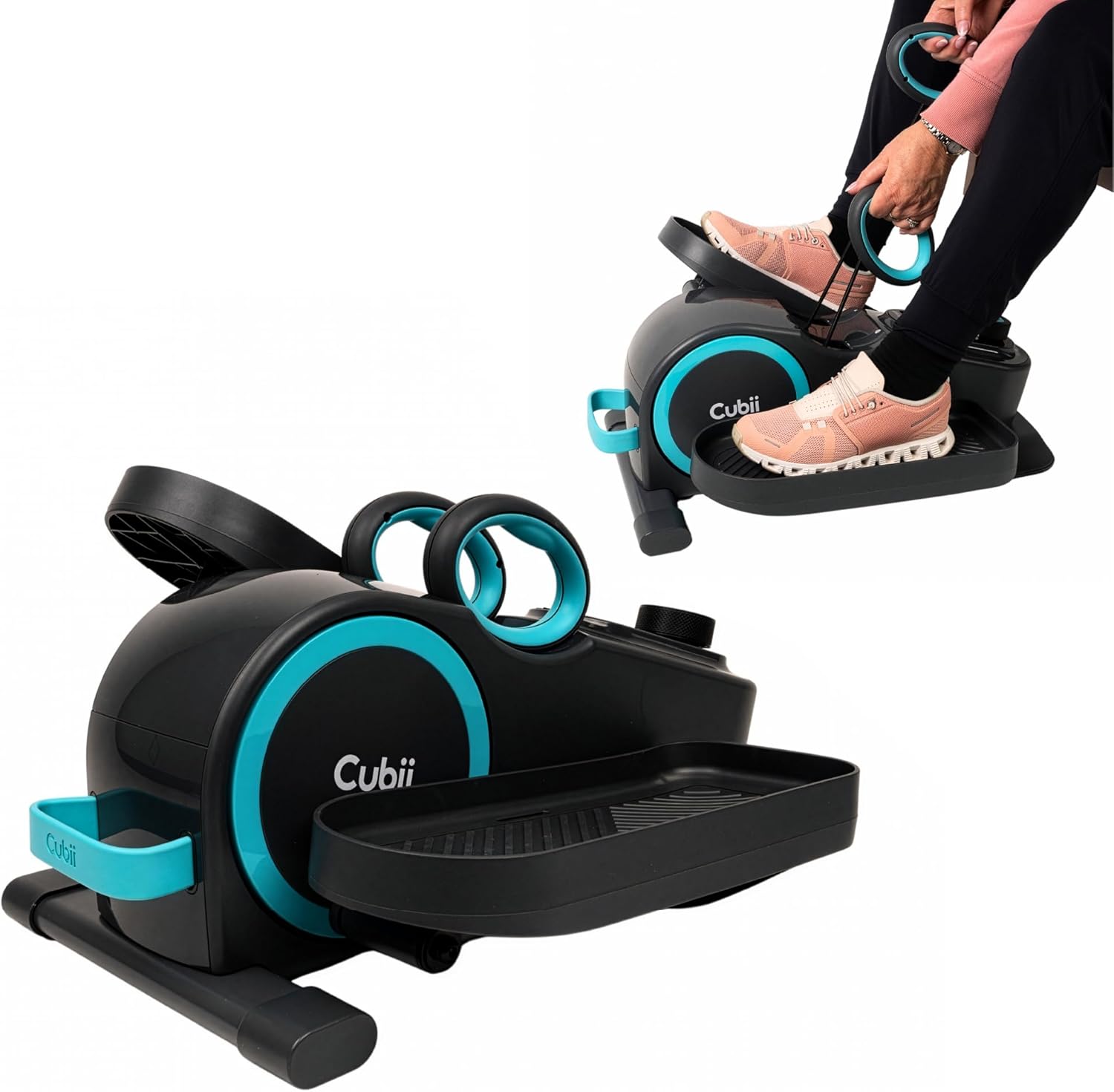
This one’s different. The Cubii Pro is a pedaling machine you use while sitting in your regular chair. Technically it’s an elliptical, not a bike. But it appears constantly when people search for “sitting exercise bike for seniors.”
It’s genuinely good for people who can’t get on/off a full-size bike, have very limited mobility, or want something to use while watching TV without moving to another room. It sells for around $250 to $300 and has strong reviews from physical therapists for post-knee-replacement recovery.
How long should seniors with bad knees ride a stationary bike?
The CDC recommends 150 minutes of moderate aerobic activity per week for adults. For seniors with knee arthritis, the Arthritis Foundation suggests starting with just 5 to 10 minutes at low resistance and building up over 2 to 4 weeks.
10 minutes daily is better than 60 minutes once a week. Joint health improves with consistent, gentle movement, not occasional hard sessions.
A good starting protocol: 10 minutes, low resistance, 3 times a week. Add 2 to 3 minutes per week until you’re at 25 to 30 minutes. Stay at a pace where you can hold a conversation.
Does resistance level affect knee pain?
Yes, and people get this backwards. High resistance doesn’t cause more knee pain than low resistance does. Low resistance at high speed (spinning fast) actually creates more repetitive joint stress than moderate resistance at a slower cadence.
The Arthritis Foundation specifically recommends “moderate resistance, slower cadence” over “low resistance, fast spinning” for people with knee arthritis. Aim for 50 to 60 RPM (rotations per minute), not 90+. Most bike consoles show cadence. Check it.
Should you see a doctor before starting?
If you’ve had knee surgery, a recent injury, or severe bone-on-bone arthritis, yes. Get clearance first. This isn’t legal boilerplate. A physical therapist can also assess your specific range of motion and tell you if recumbent or upright works better for your knee anatomy.
For mild to moderate osteoarthritis with no recent surgery? Most physicians actively encourage cycling. The American College of Rheumatology includes low-impact aerobic exercise as a first-line recommendation for managing knee osteoarthritis (published in their 2019 clinical guidelines).
Quick comparison: recumbent vs upright bike for bad knees
| Feature | Recumbent | Upright |
|---|---|---|
| Knee angle at top of stroke | Gentler | Sharper |
| Back support | Yes | No |
| Step-through frame | Usually yes | Varies |
| Good for arthritis | Best option | Mild cases only |
| Typical price range | $180 to $600 | $150 to $400 |
Final word
Bad knees don’t mean no cardio. They mean smarter cardio.
A recumbent bike with magnetic resistance, proper seat adjustment, and a low step-through frame covers everything most seniors with knee or back problems need. The Schwinn 230 is the best all-around pick. The Exerpeutic 900XL is the best if you want to spend under $250.
Start slow. Ride consistently. Your quads will get stronger, your knees will thank you, and you’ll actually stick with it because it won’t hurt every time.
Sources: Arthritis Foundation (arthritis.org), CDC Physical Activity Guidelines, American College of Rheumatology 2019 Osteoarthritis Guidelines, Journal of Rheumatology (2021).
