
Last Updated on March 8, 2026 by Shavu
Living with arthritis doesn’t mean you have to give up on staying active. In fact, regular low-impact exercise is one of the best ways to manage joint pain and stiffness. But finding the right equipment? That’s where it gets tricky. Traditional exercise bikes can put unnecessary stress on already-sensitive joints, especially when dealing with arthritis in knees, hips, or back. The good news is that there are exercise bikes specifically designed with seniors in mind—bikes that offer comfortable seating, easy mounting, gentle resistance, and smooth pedaling motion. These aren’t your typical gym bikes; they’re built to provide effective cardio workouts without aggravating arthritis symptoms. Now, you’re probably thinking, “Aren’t these specialized bikes super expensive?” Honestly, not always. There are some excellent options out there for seniors with arthritis that deliver comfort and functionality without breaking the bank.
Our Top 3 Picks
Best Overall – Schwinn 270 Recumbent Bike
The Schwinn 270 is the best exercise bike for seniors with arthritis that comes with exceptional back support, 25 resistance levels, and smooth magnetic resistance for pain-free workouts with advanced tracking capabilities.
Best Budget – Marcy Recumbent Exercise Bike ME-709
Available at an affordable price, the Marcy ME-709 is the best budget exercise bike that helps manage workouts for seniors with arthritis efficiently. It has a perfect combination of comfortable seating, step-through design, and basic tracking features for seamless operations.
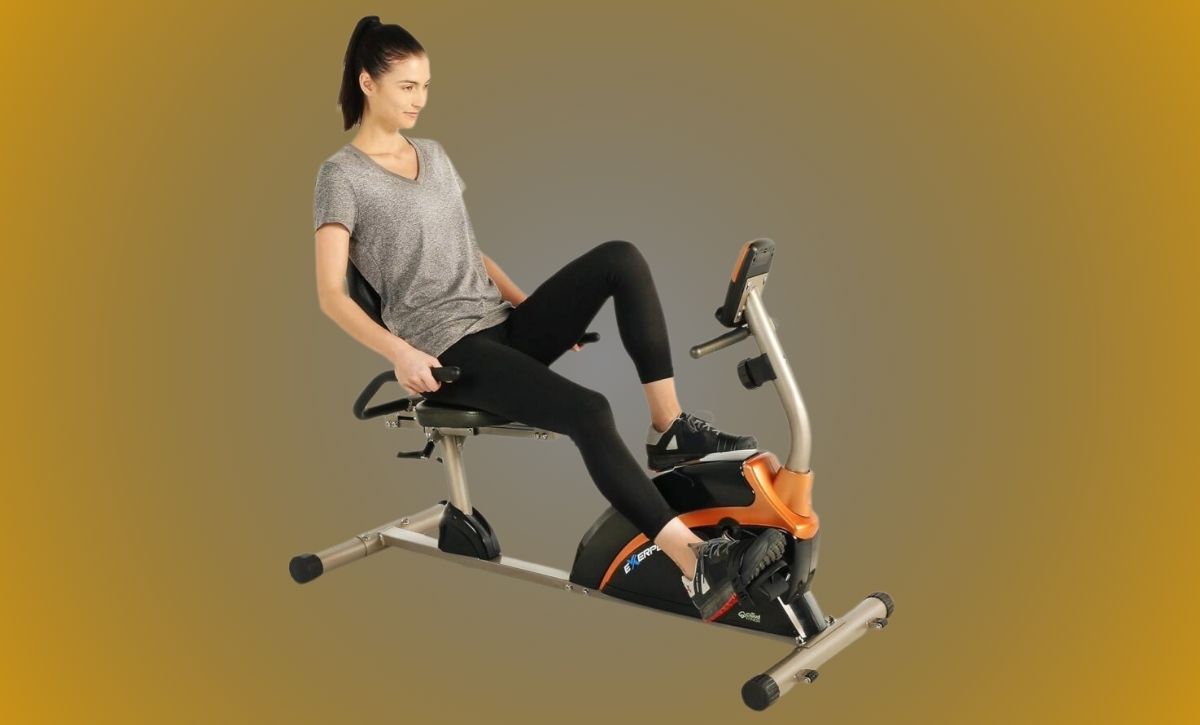
Best Comfort – Exerpeutic 900XL Extended Capacity Recumbent Bike
This exercise bike features the most comfortable oversized seat with extra-wide design and maximum lumbar support, which is considered the best given the comfort needs of seniors with severe arthritis.
Summary Of The 5 Best Exercise Bikes for Seniors with Arthritis
To make your research task easier, our team of experts has undergone exhaustive research of various factors for devising this below-mentioned price-cum-rank list of the best exercise bikes for seniors with arthritis. We hope it helps our readers with efficient decision-making.
| S No. | Product Name | Price (in USD) |
|---|---|---|
| 1 | Schwinn 270 Recumbent Bike | Check Offer Price |
| 2 | Exerpeutic 900XL Extended Capacity Recumbent Bike | Check Offer Price |
| 3 | Marcy Recumbent Exercise Bike ME-709 | Check Offer Price |
| 4 | Nautilus R616 Recumbent Bike | Check Offer Price |
| 5 | Sunny Health & Fitness Magnetic Recumbent Bike | Check Offer Price |
5 Best Exercise Bikes for Seniors with Arthritis
There are plenty of exercise bikes available in the market for seniors. Therefore, choosing the perfect exercise bike that suits all your requirements becomes a daunting task. In this section, we will elaborate on the details about the 5 best exercise bikes for seniors with arthritis for our readers.
1. Schwinn 270 Recumbent Bike
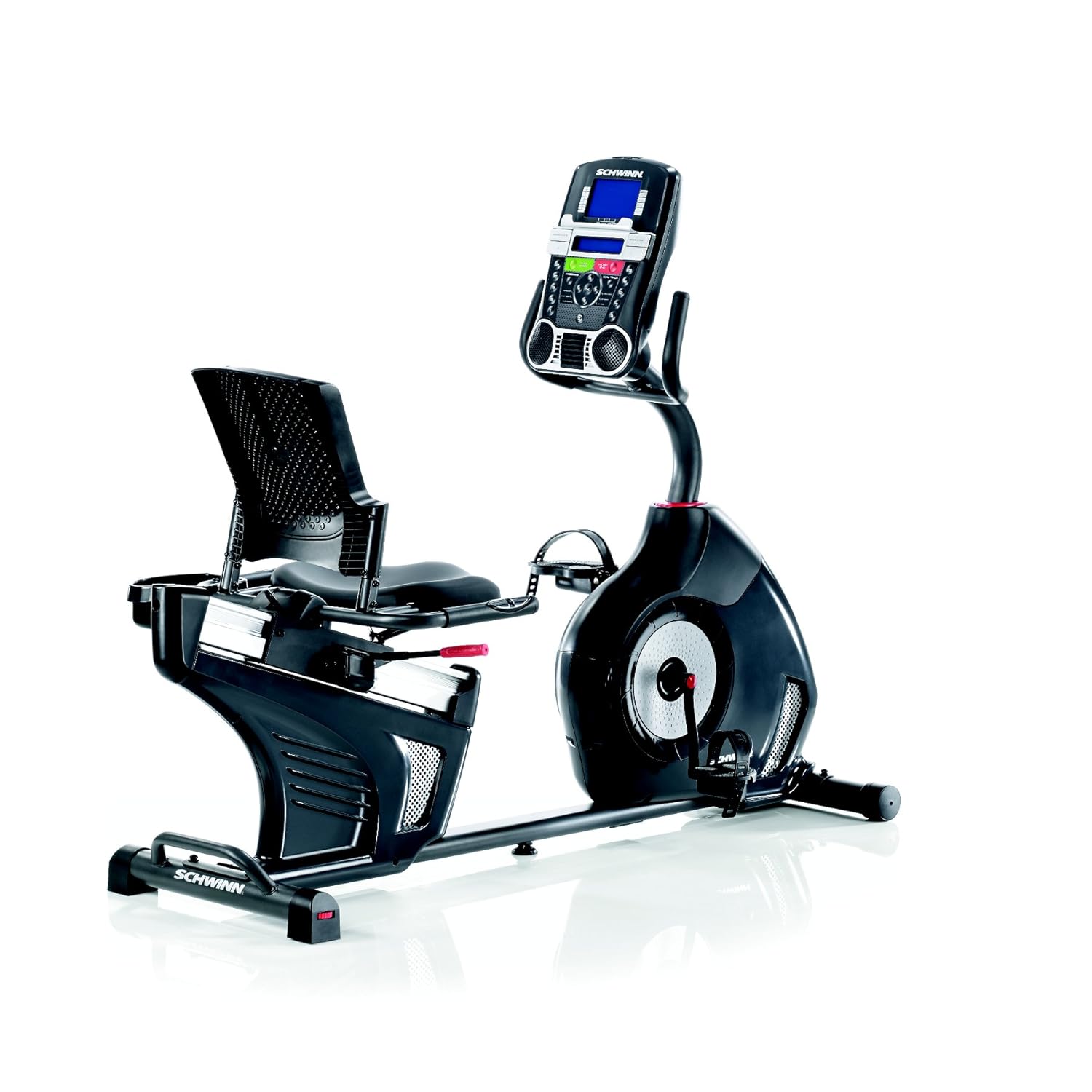
Schwinn brings a premium recumbent bike with advanced features specifically beneficial for seniors managing arthritis. The contoured seat with ventilated backrest provides exceptional lumbar support during extended workouts. It features 25 levels of smooth magnetic resistance that eliminates jarring movements on sensitive joints. The bike offers 29 preset workout programs including heart rate control options. The step-through frame design makes mounting and dismounting effortless, especially for those with limited mobility. With dual LCD displays tracking comprehensive workout metrics and Bluetooth connectivity for app integration, this bike delivers both comfort and technology.
Specifications:
- Brand – Schwinn
- Dimensions and Weight – 64″ L x 27.7″ W x 49.9″ H, 86.6 lbs
- Weight Capacity – 300 lbs
- Resistance Levels – 25 levels of magnetic resistance
- Seat Type – Contoured with ventilated backrest and lumbar support
- Pedals – Weighted pedals with adjustable straps
- Display – Dual LCD screens with Bluetooth connectivity
- Programs – 29 workout programs
- Heart Rate Monitoring – Contact grip sensors and telemetry enabled
- Power Supply – AC adapter included
- Warranty – 10-year frame, 2-year mechanical, 1-year electrical
- Assembly – Moderate difficulty
- Ratings and Reviews – 82% 5-star rating and 12% 4-star rating
| Pros | Cons |
|---|---|
| The 25 resistance levels allow gradual progression without stressing arthritic joints unnecessarily. | The initial price point around $649 may be high for budget-conscious seniors. |
| Excellent lumbar support minimizes back strain during longer workout sessions. | Assembly can be challenging and may require two people due to weight. |
| Bluetooth connectivity syncs with fitness apps for comprehensive health tracking. | The bike’s large footprint requires dedicated floor space in your home. |
| Smooth magnetic resistance creates no jarring movements on sensitive knees and hips. | Some users report the seat slider mechanism can be stiff when first adjusting. |
2. Exerpeutic 900XL Extended Capacity Recumbent Bike
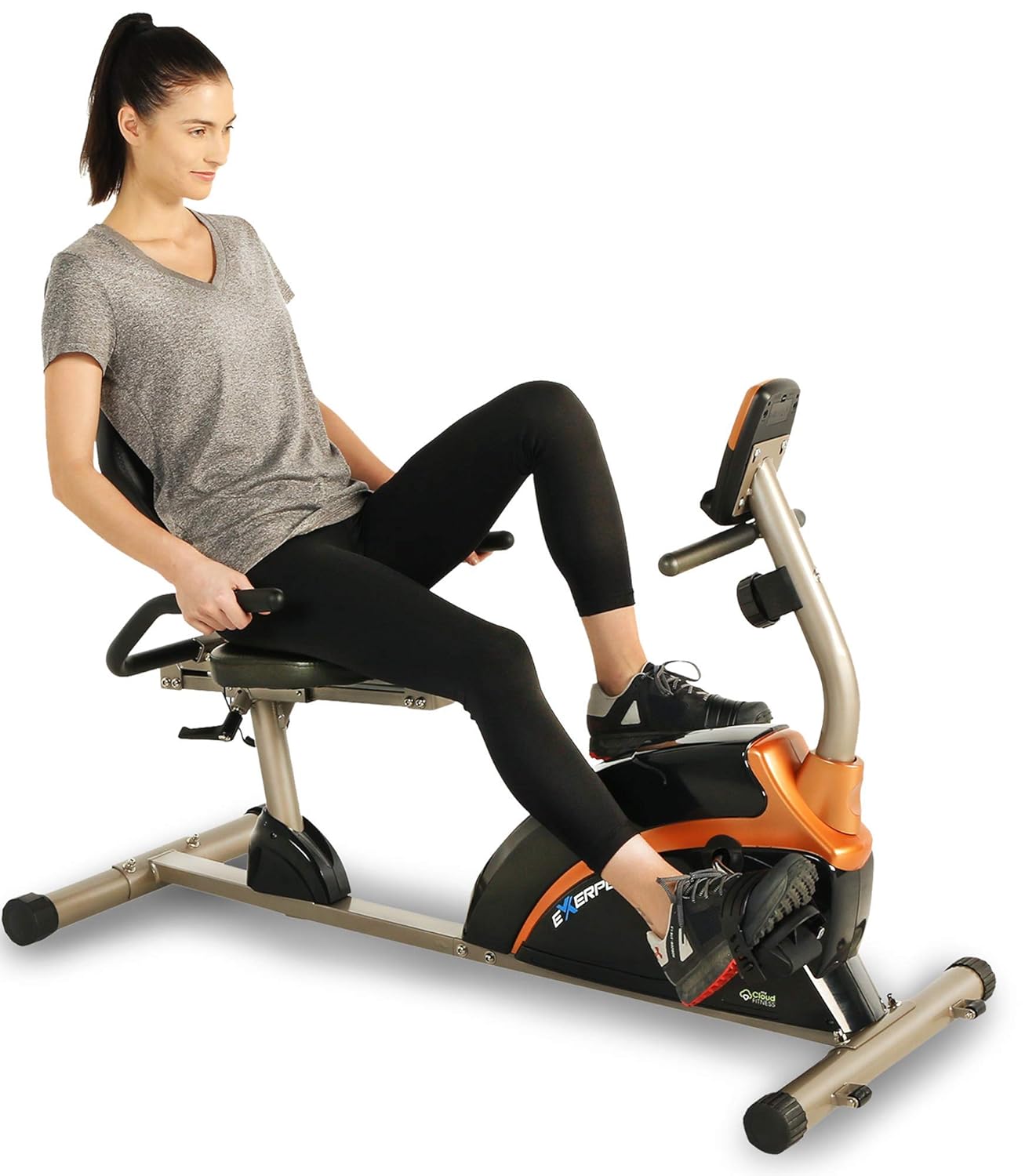
Exerpeutic offers an exceptionally comfortable recumbent bike designed specifically for users with mobility challenges and arthritis pain. The extra-large seat cushion measures 11 inches wide with a supportive backrest that extends higher than most competitors. It features eight levels of smooth magnetic resistance perfect for gentle, joint-friendly workouts. The extended leg stabilizers provide superior stability during use. The step-through frame design sits remarkably low to the ground, making entry and exit incredibly easy for those with limited range of motion. The large LCD displays workout metrics clearly, and the bike operates whisper-quiet, making it perfect for home use without disturbing others.
Specifications:
- Brand – Exerpeutic
- Dimensions and Weight – 54″ L x 22″ W x 34″ H, 63 lbs
- Weight Capacity – 300 lbs
- Resistance Levels – 8 levels of magnetic resistance
- Seat Type – Extra-large cushioned seat (11″ wide) with high backrest
- Pedals – Large pedals with safety straps
- Display – LCD showing distance, calories, time, speed, heart rate
- Programs – Manual resistance adjustment
- Heart Rate Monitoring – Hand pulse sensors
- Power Supply – Battery operated (no outlet needed)
- Warranty – 3-year frame, 1-year parts
- Assembly – Easy, approximately 30-45 minutes
- Ratings and Reviews – 78% 5-star rating and 15% 4-star rating
| Pros | Cons |
|---|---|
| The extra-wide seat provides exceptional comfort for extended workout sessions and larger body types. | Only 8 resistance levels may limit progression for some users over time. |
| Battery operation means placement anywhere without needing an electrical outlet nearby. | The LCD display is basic with no advanced tracking or connectivity features. |
| Extremely easy assembly compared to other recumbent bikes in this price category. | The seat adjustment mechanism offers limited positioning options for height variations. |
| The step-through design is among the lowest available, ideal for severe arthritis sufferers. | No preset workout programs or automated resistance changes during workouts. |
3. Marcy Recumbent Exercise Bike ME-709
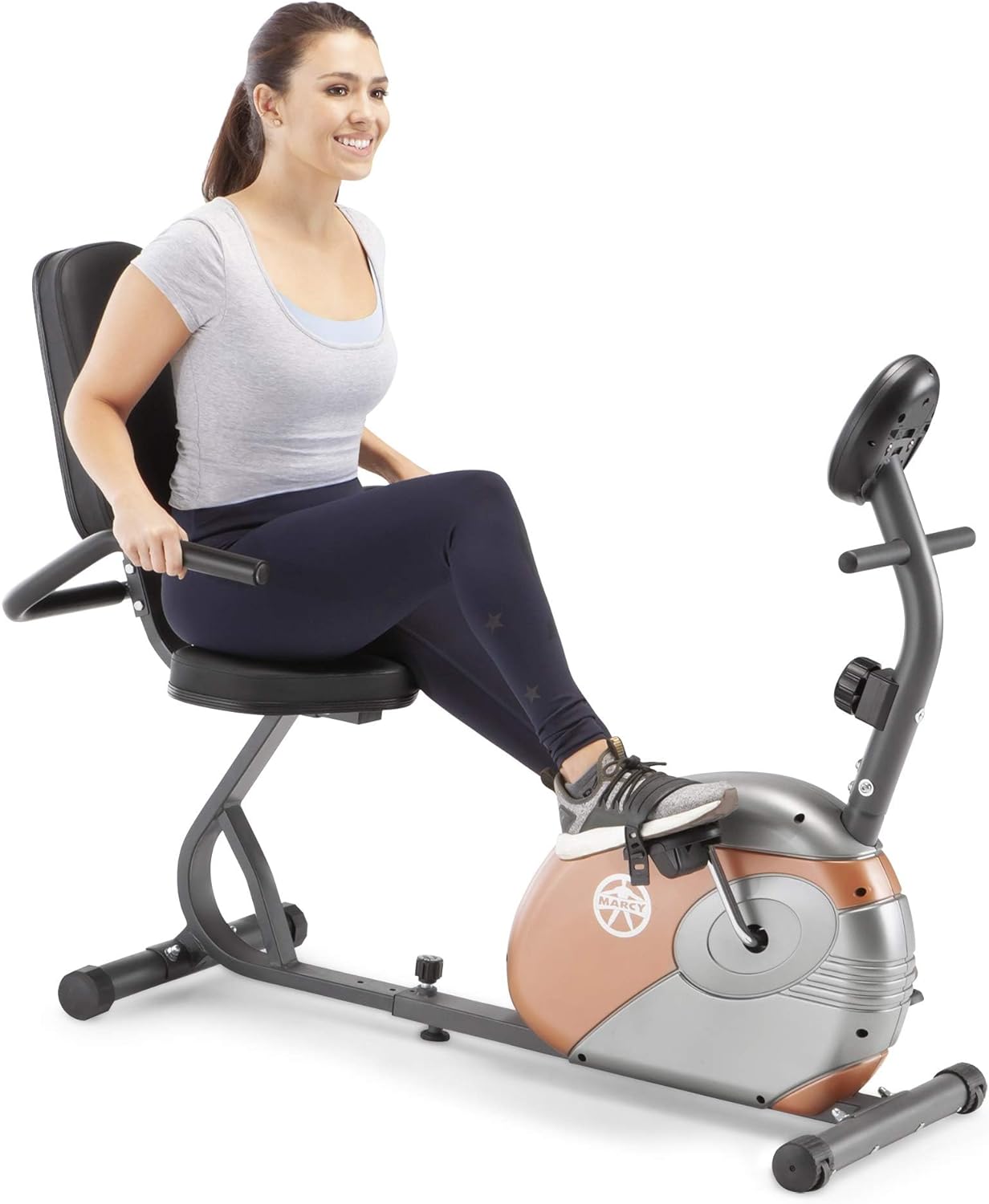
Marcy provides an affordable yet reliable recumbent bike perfect for seniors beginning their fitness journey while managing arthritis symptoms. The padded seat and backrest offer comfortable support without premium pricing. It features eight preset resistance levels that adjust smoothly via a magnetic tension system, ensuring no sudden jolts to sensitive joints. The step-through design allows easy mounting, and the transport wheels make relocation simple when needed. The pedals include adjustable foot straps for secure positioning during workouts. The LCD computer tracks speed, distance, time, and calories burned effectively. Despite its budget-friendly price, the bike maintains solid construction with a sturdy steel frame that ensures stability and durability.
Specifications:
- Brand – Marcy
- Dimensions and Weight – 55.5″ L x 25″ W x 37.5″ H, 61 lbs
- Weight Capacity – 300 lbs
- Resistance Levels – 8 levels of magnetic resistance
- Seat Type – Padded seat with backrest support
- Pedals – Counterbalanced pedals with adjustable straps
- Display – LCD showing time, speed, distance, calories
- Programs – Manual resistance control
- Heart Rate Monitoring – Not included
- Power Supply – Battery operated
- Warranty – 2-year frame, 90-day parts
- Assembly – Moderate, approximately 1 hour
- Ratings and Reviews – 73% 5-star rating and 17% 4-star rating
| Pros | Cons |
|---|---|
| Most affordable option without sacrificing essential features for arthritis-friendly exercise. | No heart rate monitoring capability limits ability to optimize workout intensity. |
| Lightweight design with transport wheels makes moving and storage convenient for seniors. | The seat padding is adequate but not as plush as premium models. |
| The magnetic resistance system operates quietly for distraction-free exercise at home. | Limited seat adjustability may not accommodate all body types comfortably. |
| Compact footprint fits well in smaller living spaces or apartments without issue. | The warranty period is shorter compared to higher-end competitors in the market. |
4. Nautilus R616 Recumbent Bike
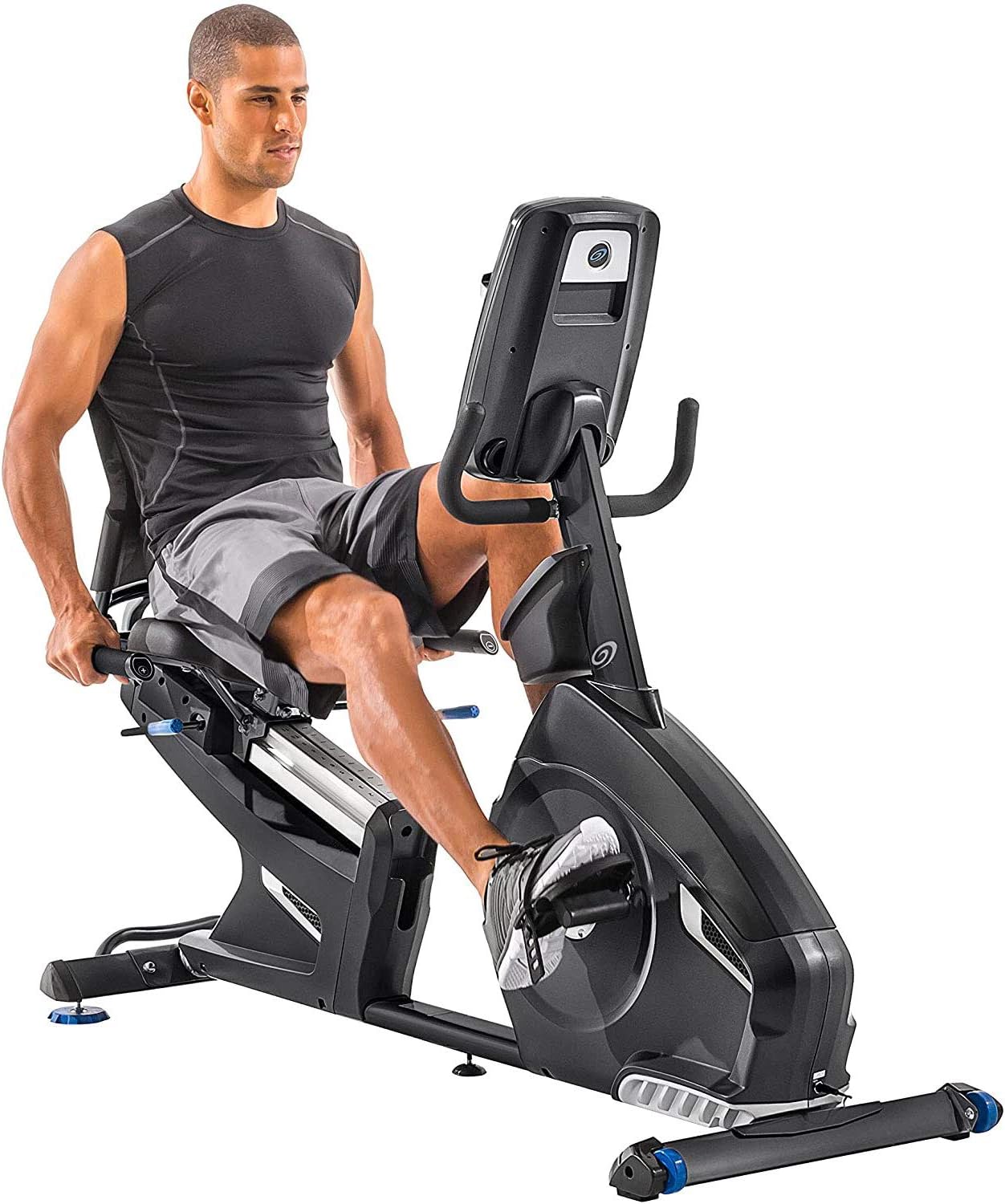
Nautilus delivers a feature-rich recumbent bike with technology integration that appeals to tech-savvy seniors seeking comprehensive fitness tracking. The ventilated and contoured seat back provides excellent lumbar support for prolonged comfort during workouts. It features 25 levels of eddy current resistance with 29 customizable workout programs including heart rate control for optimal training zones. The bike connects via Bluetooth to popular fitness apps and includes acoustic chambered speakers for entertainment. The high-resolution dual-track LCD displays provide clear visibility of workout metrics from any angle. The step-through frame design accommodates easy access, while the three-speed adjustable fan keeps you cool and comfortable during intense sessions.
Also Read:-5 Best Running Treadmill For Home Use Under $1000
Specifications:
- Brand – Nautilus
- Dimensions and Weight – 65″ L x 28″ W x 50″ H, 85 lbs
- Weight Capacity – 300 lbs
- Resistance Levels – 25 levels of eddy current resistance
- Seat Type – Contoured with ventilated backrest and lumbar support
- Pedals – Weighted pedals with adjustable straps
- Display – Dual-track LCD screens with USB charging port
- Programs – 29 workout programs with customization options
- Heart Rate Monitoring – Contact grip sensors and telemetry enabled
- Power Supply – AC adapter included
- Warranty – 10-year frame, 2-year mechanical, 1-year electrical
- Assembly – Moderate to difficult, 1-2 hours recommended
- Ratings and Reviews – 80% 5-star rating and 13% 4-star rating
| Pros | Cons |
|---|---|
| Extensive workout program variety prevents boredom and promotes consistent exercise habits long-term. | The higher price point around $599 may not fit all senior budgets comfortably. |
| Bluetooth connectivity and app integration allow seamless tracking of fitness progress over time. | Assembly process is more complex and time-consuming than simpler models. |
| Built-in speakers allow entertainment during workouts without needing separate devices nearby. | The bike’s substantial weight makes relocation difficult without assistance from others. |
| The three-speed fan provides customizable cooling during workouts for maximum comfort levels. | Multiple features may feel overwhelming for seniors who prefer simple, straightforward equipment. |
Also Read: What to Eat at Night When Hungry and Trying to Lose Weight?
5. Sunny Health & Fitness Magnetic Recumbent Bike
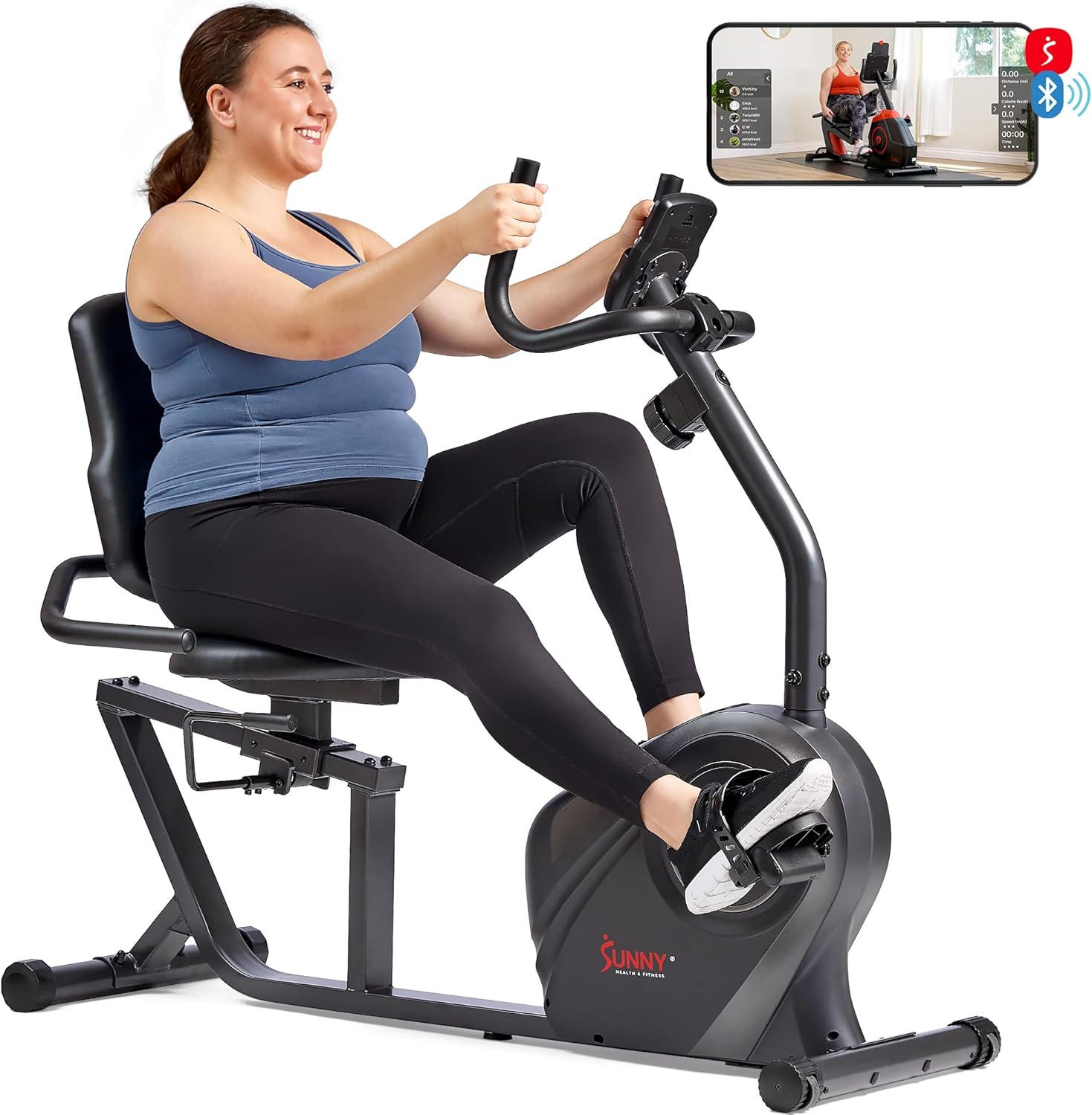
Sunny Health & Fitness brings a reliable and economical recumbent bike designed with simplicity and functionality in mind for seniors. The comfortable padded seat with backrest support ensures proper posture during workouts. It features eight levels of magnetic resistance that can be easily adjusted with a simple tension knob. The large anti-slip pedals with adjustable straps accommodate various foot sizes securely. The easy-to-read LCD monitor displays time, speed, distance, calories, and odometer for basic tracking needs. The bike’s sturdy steel frame construction ensures stability during use, while the transportation wheels allow easy relocation. With its straightforward design and no complicated technology, this bike is perfect for seniors who want effective exercise without unnecessary complexity.
Specifications:
- Brand – Sunny Health & Fitness
- Dimensions and Weight – 58.5″ L x 25″ W x 38″ H, 73 lbs
- Weight Capacity – 300 lbs
- Resistance Levels – 8 levels of magnetic resistance
- Seat Type – Cushioned seat with backrest
- Pedals – Large anti-slip pedals with adjustable straps
- Display – LCD monitor showing time, speed, distance, calories, odometer
- Programs – Manual resistance adjustment
- Heart Rate Monitoring – Hand pulse sensors on handlebars
- Power Supply – Battery operated (batteries included)
- Warranty – 3-year frame, 180-day parts
- Assembly – Easy to moderate, under 1 hour
- Ratings and Reviews – 75% 5-star rating and 16% 4-star rating
| Pros | Cons |
|---|---|
| Very affordable price point makes it accessible for seniors on fixed incomes and tight budgets. | Basic features may not satisfy those seeking advanced tracking or connectivity options. |
| Simple, straightforward design is easy to use without complicated technology or setup requirements. | The seat could benefit from additional padding for maximum comfort during longer sessions. |
| Hand pulse sensors provide basic heart rate monitoring for safety during exercise routines. | Limited resistance levels compared to premium models may restrict long-term progression. |
| Transportation wheels make the bike easy to move for cleaning or storage purposes when needed. | No preset programs means users must create their own workout routines manually each time. |
How Can You Pick The Best Exercise Bike for Seniors with Arthritis For Yourself?
1. Size and Stability
Size is absolutely one of the most important factors to consider when purchasing an exercise bike, especially for seniors with arthritis. Remember that adequate dimensions and rock-solid stability are crucial for your safety and confidence while exercising. A wobbly or unstable bike can cause anxiety and potentially lead to dangerous falls or joint injuries.
The bike’s footprint is used to determine if it will fit in your available space, but more importantly, the width of the base dictates overall stability during use. The smallest acceptable size for seniors typically features a wide base measuring at least 22 inches for balance. Extra-stable models with extended leg stabilizers are ideal for those with balance concerns or severe arthritis. The most suitable designs provide enough stability that you feel secure and can focus entirely on your workout rather than worrying about tipping. For seniors living in apartments or smaller homes, measuring your available space before purchasing is essential to avoid the frustration of a bike that doesn’t fit where you planned to place it.
Also Read:- 7 Best Treadmill for Small Spaces with Incline 2026
2. Seat Comfort and Adjustability
What is the single most important comfort feature on an exercise bike? The seat serves as your primary contact point during every workout. It’s critical to understand the seating system you’re buying, as discomfort here can quickly end your exercise session and discourage regular use. Various seat types are offered at different price points, including standard padded seats, extra-wide cushioned seats, contoured seats with lumbar support, and ventilated backrests. The consumer must first determine their specific comfort needs, which makes selecting the right seat design a lot easier. When purchasing an exercise bike, having adequate seat padding and proper back support is essential to prevent aggravating existing arthritis pain.
The adjustability factor cannot be overlooked when considering seat selection for seniors. Bikes with easy-to-use adjustment mechanisms allow you to find your perfect position without struggling with complicated levers or requiring excessive strength. The seat should adjust both horizontally and sometimes vertically to accommodate different leg lengths and body types. For arthritis sufferers, being able to find that sweet spot where knees don’t overextend and hips remain comfortable throughout the pedaling motion makes all the difference between a workout you’ll repeat and one you’ll dread. Many premium bikes now feature tool-free adjustment systems that even those with hand arthritis can operate independently.
3. Resistance Levels
The resistance system plays a crucial role in exercise bikes for arthritis management. The smoothness and adjustability you will experience are determined by the quality of the resistance mechanism installed. Magnetic resistance systems are superior for arthritis sufferers because they provide butter-smooth transitions with no jerking motions that could stress inflamed joints. In general, bikes with 8-16 resistance levels offer enough variety for gradual progression without overwhelming beginners. If budget allows, advanced magnetic or eddy current systems provide the smoothest operation available. Many high-end bikes feature resistance that adjusts in tiny increments, allowing you to increase difficulty so gradually that your joints barely notice the change from one workout to the next.
4. Entry and Exit Design
The entry and exit mechanism controls the entire accessibility of your exercise bike. A step-through design ensures you can mount and dismount without having to lift your leg high or twist uncomfortably. For seniors with hip or knee arthritis, this feature isn’t just convenient—it’s often the deciding factor in whether they can use the bike at all. The best step-through designs sit low to the ground, typically 6-10 inches from floor level, requiring minimal leg lift to get on and off. Some bikes feature extended handrails or handles positioned perfectly to provide support as you settle into the seat or stand up after your workout. This is especially valuable for those with balance issues or severe joint pain in the lower body.
5. Joint-Friendly Pedaling Motion
Pedaling motion quality is a critical concern, especially for households with seniors managing arthritis in their knees, hips, or ankles. Advanced bikes use precision engineering and quality bearings to create an exceptionally smooth circular motion that minimizes joint stress. Focusing on pedaling smoothness when buying an exercise bike is essential because jerky or uneven motion can trigger pain flares and potentially cause joint damage over time. The best recumbent bikes feature a pedaling arc that keeps your legs in a natural, comfortable position throughout the rotation, never forcing joints into awkward angles or requiring sudden directional changes that could cause discomfort.
6. Display and Tracking Features
Another consideration while purchasing an exercise bike is the display readability and tracking capabilities. Even if fancy technology doesn’t matter to all seniors, choosing a model with a clear, easy-to-read display is prudent. Small screens with tiny numbers can be frustrating, especially for those with vision issues. Loud displays with backlit screens are preferred, as they allow you to monitor your progress without squinting or leaning forward uncomfortably. The tracking information should be straightforward and presented in large, high-contrast text that’s visible from your seated position without straining. Creating a comprehensive monitoring system necessitates displays that show time, distance, calories, and heart rate simultaneously for remarkable peace of mind during workouts.
7. Assembly and Maintenance
In the majority of situations, exercise bikes still require initial assembly and periodic maintenance. Because proper setup extends the device’s lifespan and ensures safety, the assembly process must be as simple as possible. Easy-to-follow instructions with clear diagrams are now standard with quality bikes, allowing you to complete assembly in a relatively short amount of time with basic tools. You only need to determine if you have the physical capability for assembly, and if not, selecting a model with professional assembly services available will help you avoid frustration and potential injury from struggling with heavy parts. Many manufacturers now offer assembly videos online that walk you through each step visually, which can be especially helpful for visual learners.
8. Weight Capacity
Managing your body weight safely requires special considerations beyond simply meeting the minimum threshold. A quality exercise bike should handle your weight with substantial margin for safety and longevity. The majority of bikes designed for seniors and larger individuals feature weight capacities of 300 pounds or more. Exceeding the stated weight capacity can lead to frame stress, premature wear on moving parts, and potentially dangerous equipment failure during use. Knowing the weight rating is advantageous for ensuring the bike will remain stable and functional throughout its expected lifespan, ensuring that your investment provides years of reliable service without concerns about structural integrity compromising your safety.
9. Handlebar Design
Handlebar configuration impacts more than just where you rest your hands during exercise. For seniors with arthritis, particularly in the hands, wrists, or shoulders, handlebar positioning and grip design make a significant difference in comfort. Multiple handlebar positions allow you to change hand placement throughout your workout, preventing any single joint from bearing stress for too long. Some bikes feature ergonomically designed grips with cushioning that reduces pressure on arthritic hands. Handlebars positioned at various heights and distances from the seat accommodate different arm lengths and flexibility levels, ensuring everyone can find a comfortable reach that doesn’t strain shoulders or require uncomfortable forward leaning.
10. Noise Level
The operational noise level during pedaling sessions deserves serious consideration, especially for those living in apartments, condos, or homes with others nearby. Quiet motor systems are preferred, as excessive noise can be distracting, annoying to family members or neighbors, and may indicate poor-quality components that could fail prematurely. Magnetic resistance bikes operate virtually silent compared to friction-based systems, making them ideal for early morning or late evening workouts when others are sleeping. The smoothness and quietness of operation often correlate directly with overall build quality and the precision of the bike’s engineering.
11. Price and Warranty
Creating a budget and understanding warranty protection necessitates careful consideration before making your purchase. One must first determine their maximum spending limit, after which researching bikes within that range becomes much more focused and productive. You should bring home a unit that balances initial cost with long-term value, including warranty coverage that protects your investment. Entry-level bikes starting around $200-300 can serve basic needs adequately for light use, while mid-range options in the $400-700 range typically offer significantly better comfort, durability, and features. Premium bikes above $700 provide the ultimate in comfort and technology but may exceed what many seniors need for effective arthritis-friendly exercise. Warranty terms reveal manufacturer confidence in their product, with longer warranties generally indicating better construction quality and company stability.
12. Safety Features
Safety isn’t the most glamorous feature but it’s absolutely essential when buying an exercise bike for seniors with arthritis. For those with balance concerns, limited mobility, or medications that affect coordination, investing in a unit with comprehensive safety features is an excellent idea. Safety elements like emergency stop mechanisms, secure pedal straps that prevent feet from slipping, non-slip floor pads, and stable frames with low centers of gravity prevent injuries during exercise. Look for bikes with gradual resistance changes rather than sudden jumps that could catch you off guard. Transport wheels should lock securely when the bike is in use, preventing any unwanted movement. Extended handlebars or support bars give you something substantial to grip when mounting, dismounting, or if you feel unsteady during your workout.
FAQ,About Purchasing 5 Best Exercise Bikes for Seniors with Arthritis
Here are our answers to some of the most commonly asked questions about purchasing the 5 best exercise bikes for seniors with arthritis.
1. Which is the best exercise bike for seniors with severe knee arthritis?
The Schwinn 270 Recumbent Bike is the best exercise bike for seniors with severe knee arthritis that our readers can purchase, as it provides exceptional support with smooth magnetic resistance and multiple adjustment options that accommodate limited range of motion.
2. How long should seniors with arthritis exercise on a bike daily?
Generally, starting with 10-15 minutes per day is recommended for seniors with arthritis. However, as strength and endurance improve, gradually increasing to 30 minutes of daily cycling provides optimal cardiovascular benefits while managing joint stress. For those with severe arthritis, breaking exercise into shorter 5-10 minute sessions multiple times throughout the day can be just as effective.
3. Are recumbent bikes better than upright bikes for arthritis?
Absolutely. Recumbent bikes are significantly better for seniors with arthritis because the reclined seating position reduces stress on the spine, hips, and knees. The larger seat with back support provides comfort during longer sessions, and the forward pedaling motion is gentler on joints compared to the downward pedaling of upright bikes.
4. Can exercise bikes help reduce arthritis pain and stiffness?
Yes, regular use of exercise bikes can help manage arthritis symptoms effectively. Low-impact cycling promotes joint flexibility, strengthens supporting muscles around affected joints, improves circulation, and helps maintain healthy body weight—all factors that reduce arthritis pain and stiffness over time.
5. What features should I avoid when buying an exercise bike for arthritis?
Avoid bikes with high step-over heights, hard uncomfortable seats, friction resistance systems that create jerky motion, complicated digital interfaces, limited adjustability, and insufficient weight capacity. Also, steer clear of bikes that require excessive strength to adjust or have poor stability ratings.
The Bottom Line
Buying an exercise bike for seniors with arthritis is an investment in health, mobility, and quality of life. Everything must be planned around your specific physical limitations and comfort needs, and proper decisions must be made to bring the best bike home. There are many options to pick from, and making everything in a hurry is impossible and may result in buyer’s remorse or equipment that aggravates rather than helps your condition. Reading comprehensive guides before taking a step makes you aware of many important factors about the product that you might not have considered otherwise. We hope that this post has given you all of the necessary information on the best exercise bikes for seniors with arthritis, which will help you make an informed decision. You deserve a comfortable, safe exercise experience that helps manage your arthritis symptoms, and the right bike can make daily movement something you look forward to rather than dread. Your joints will thank you for choosing equipment designed with their unique needs in mind.

2 thoughts on “5 Best Exercise Bike for Seniors with Arthritis – December 2025”