
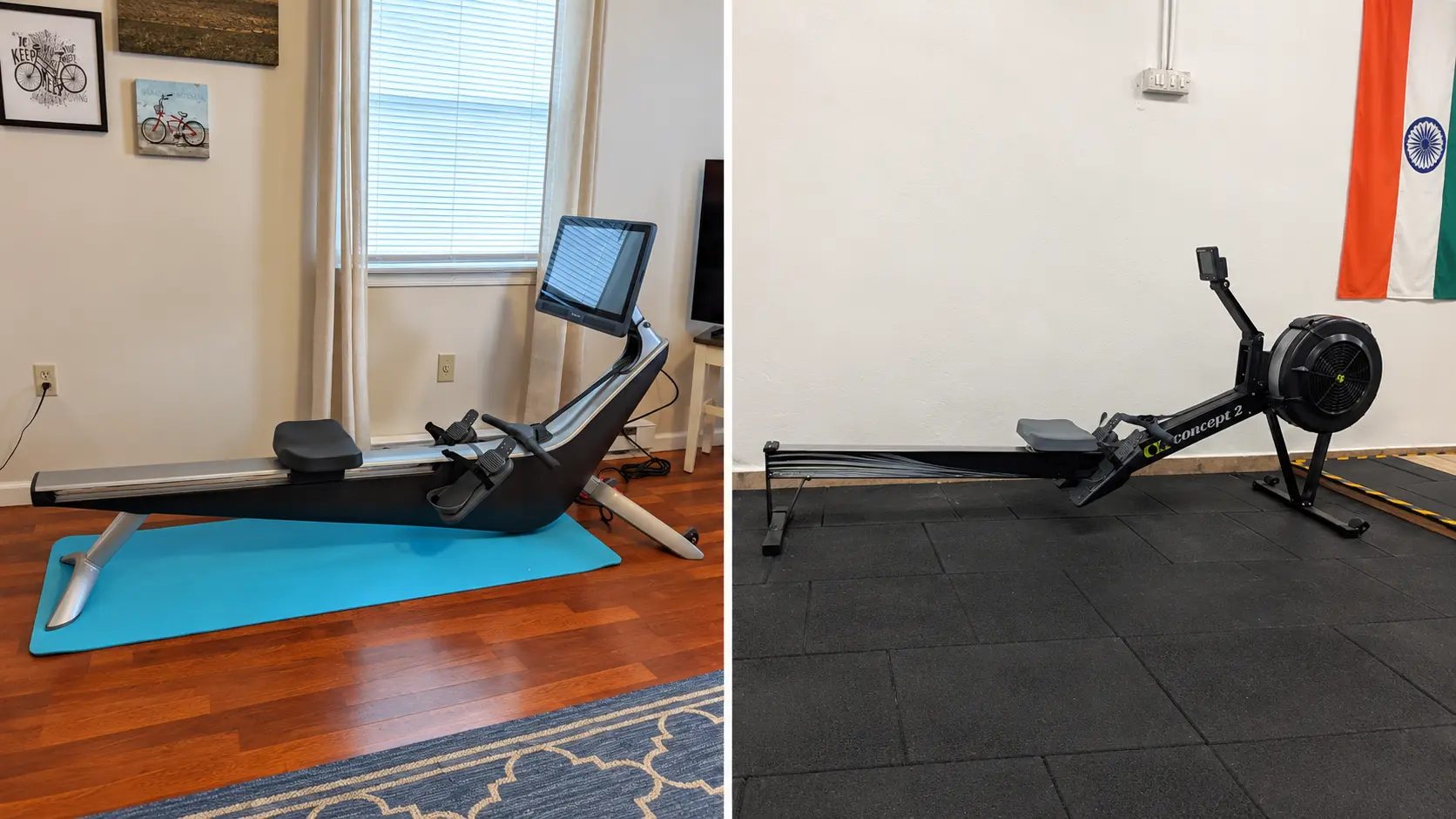

Concept2 RowErg vs Hydrow : If you’ve spent any time researching home rowing machines, these two names keep coming up — and for good reason. The Concept2 RowErg has been the gold standard in gyms and rowing clubs for decades, while Hydrow has built its reputation on immersive, on-water-style workouts. But they solve very different problems, and picking the wrong one for your goals is an expensive mistake.
If you’re specifically tight on space, it’s also worth reading our guide to 7 Best Travel Friendly Rowing Machines before deciding between these two, since neither the RowErg nor Hydrow is truly portable.
This isn’t a spec-sheet comparison. Here’s what actually separates these two machines once you’re using them day to day.
How We Researched This
This comparison is based on manufacturer technical documentation, teardown and long-term durability reports from rowing communities (including r/rowing and r/RowErg), verified owner reviews across multiple retailers, and cross-referencing maintenance logs shared by rowing clubs that use the RowErg commercially. Where owner experiences conflicted, we noted the disagreement rather than picking a side.
The Core Difference: Resistance Type
This is the single most important thing to understand before anything else.
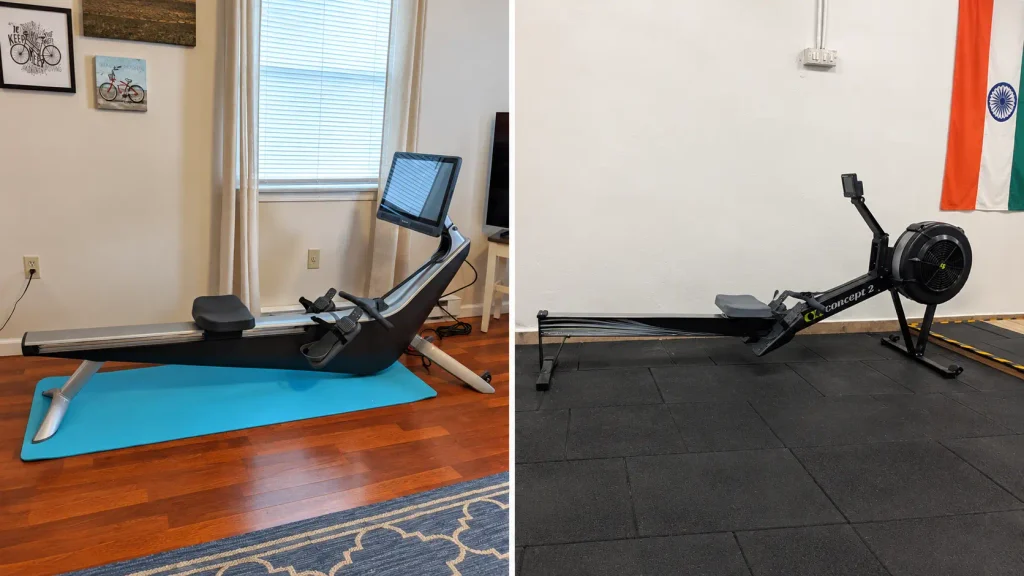
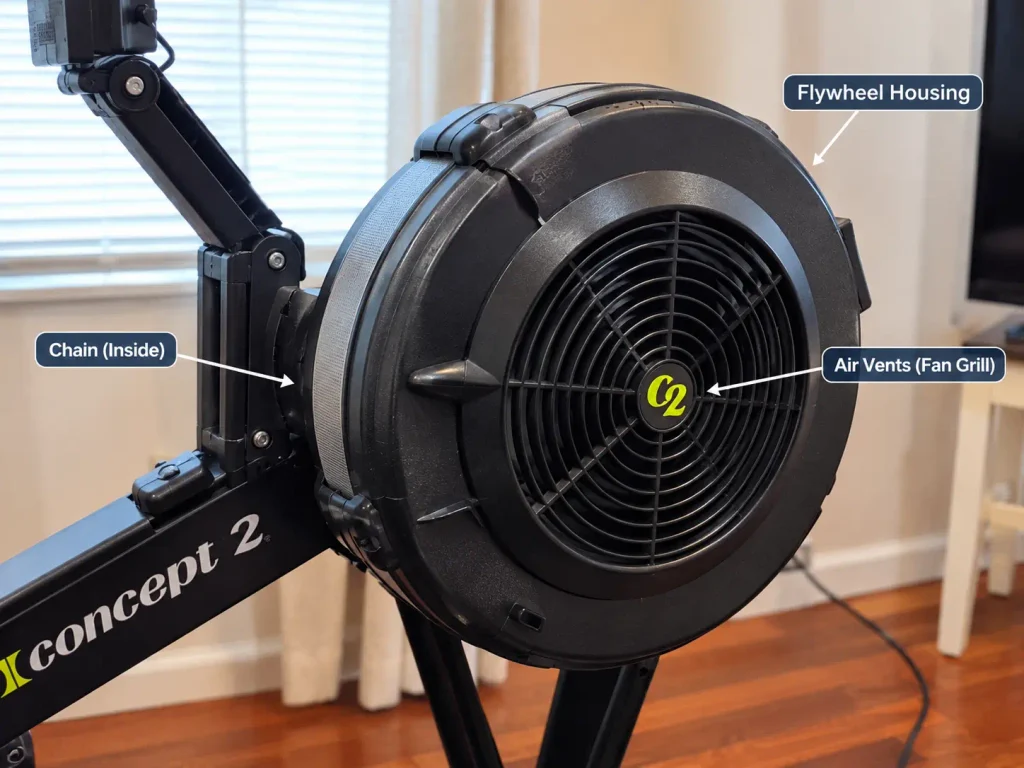
Concept2 RowErg — official product page → uses air resistance — a flywheel with adjustable air vents. The harder and faster you pull, the more resistance you feel. This is the same mechanism used in almost every competitive rowing gym and CrossFit box, which is why it’s the standard for training data (splits, watts, stroke rate) that rowers actually trust.
Hydrow — official product page → uses electromagnetic resistance, controlled digitally and designed to simulate the feel of rowing on water. It adjusts resistance automatically based on the workout class you’re following, rather than purely on your own effort.
What this means in practice: if you want a machine that responds precisely and consistently to your own power output (useful for structured training or tracking progress), the RowErg’s air resistance is more predictable. If you want variety, coaching, and a workout that feels less repetitive, Hydrow’s motor-driven resistance combined with its class library is built for that.
Build Quality and Longevity
The RowErg has a well-documented reputation for durability — it’s common to find 10+ year old units still running in gyms with nothing more than chain lubrication and occasional monitor battery changes. Its mechanical simplicity (no motor, no screen dependency) is part of why it holds up.
Hydrow is a newer product with less long-term data available. It has more electronic components — a 22-inch touchscreen, speakers, and a motor-driven resistance system — which means more that can eventually need servicing or replacement, and repairs typically require Hydrow’s own service rather than a local repair shop.
Practical takeaway: if long-term reliability with minimal dependency on electronics matters to you, RowErg’s simpler mechanical design has the stronger track record. If you’re comfortable with a subscription-based smart device (similar to a Peloton), Hydrow’s tradeoffs are more acceptable.
Space and Storage
Both machines are roughly similar in floor footprint when in use (about 8-9 feet long), but they differ significantly in how they store:
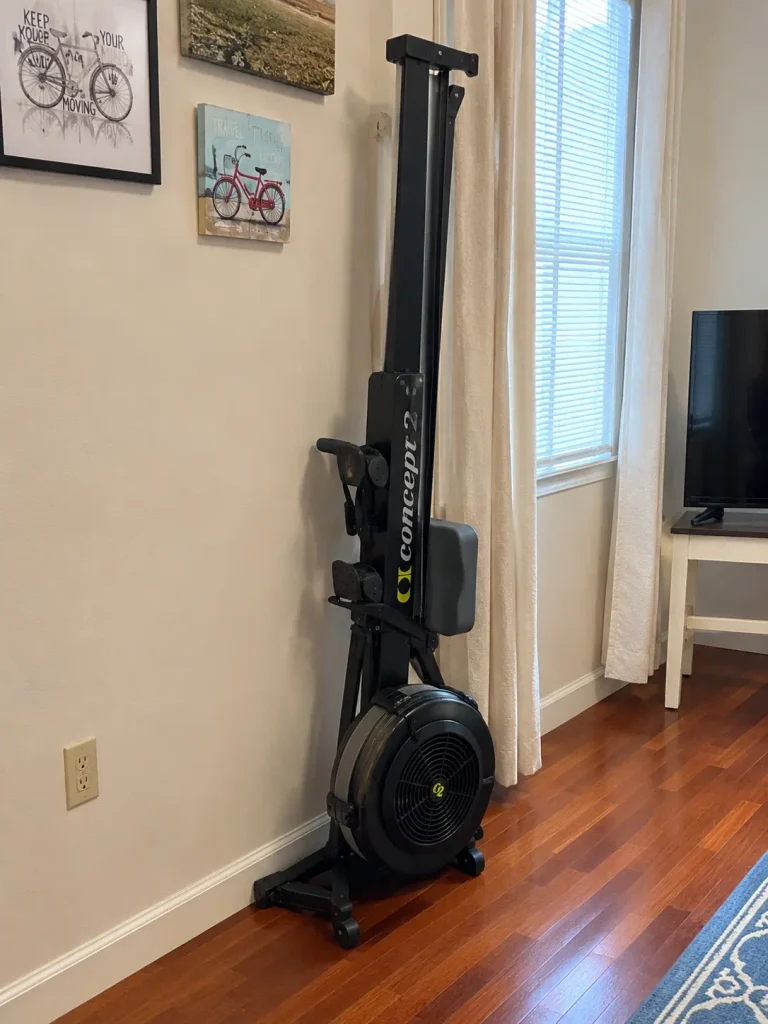
- RowErg separates into two pieces and can be stood upright against a wall, taking up a very small footprint when not in use — a real advantage for small apartments. See our travel-friendly rowing machines guide for more on space-saving rowers if this is your main concern.
- Hydrow does not fold or separate. It can be stood on end, but its footprint doesn’t shrink the way the RowErg’s does, and its 22-inch screen makes it bulkier to maneuver.
If you’re working with a small room (a common scenario for Indian apartments), this is often the deciding factor before price even comes into it.
Ongoing Costs
This is where the two diverge sharply:
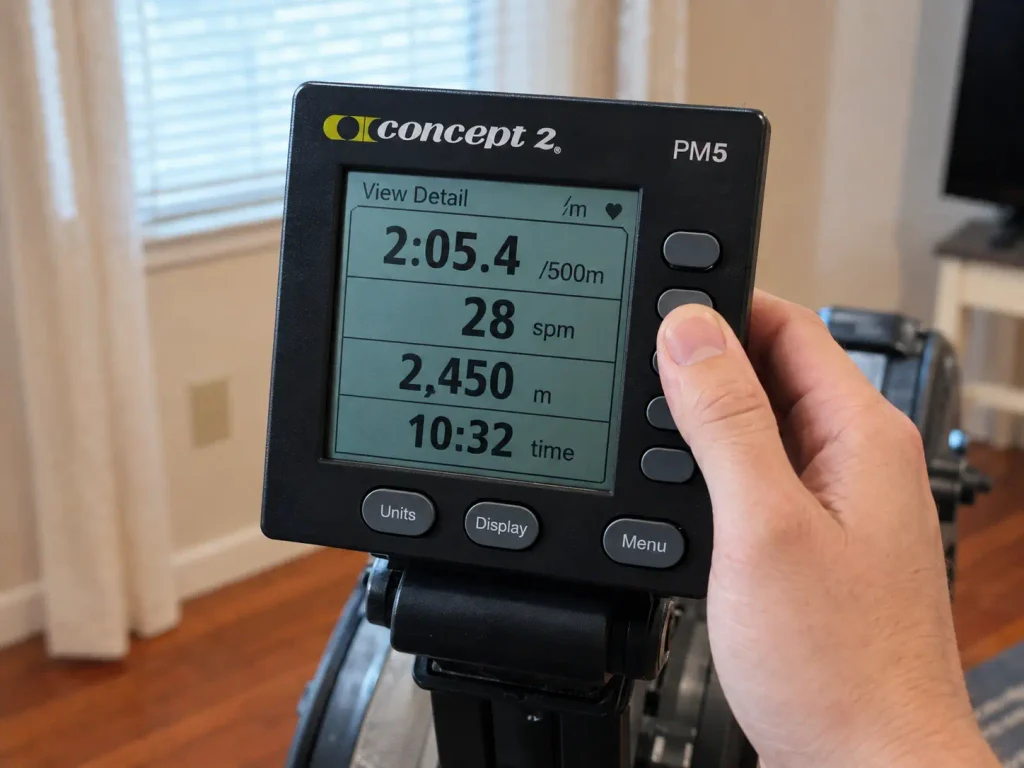
- RowErg: one-time purchase, no subscription required. The PM5 monitor gives you stroke rate, split time, distance, and calories without needing an internet connection or app.
- Hydrow: requires an ongoing membership to access its class library and full functionality. Without the subscription, the screen and coaching features are largely unusable — you’re paying for the machine and paying again to actually use it.
For a purely cost-conscious buyer, RowErg’s no-subscription model is meaningfully cheaper over 2-3 years, even though Hydrow’s upfront price is sometimes comparable.
Who Each Machine Actually Suits
Concept2 RowErg makes sense if you:
- Want objective performance data (splits, watts) to track real progress
- Prefer to design your own workouts rather than follow guided classes
- Have limited space and need something that stores compactly
- Don’t want an ongoing subscription cost
Hydrow makes sense if you:
- Are motivated by guided, instructor-led classes rather than self-directed training
- Value an immersive, on-water-style visual and audio experience
- Are comfortable with a smart-device subscription model
- Have a dedicated space where the machine can stay set up
The Honest Verdict
Neither machine is objectively “better” — they’re built for different kinds of rowers. If you’re training for performance, competing, or just want a machine that will still work reliably in a decade with no strings attached, the RowErg remains the more dependable choice. If your bigger challenge is staying motivated to work out consistently, and you’re fine paying a subscription for that, Hydrow’s class-based experience solves a real problem the RowErg doesn’t address.
The mistake most buyers make is choosing based on price or looks alone. Match the machine to why you’re rowing, not just what it costs.
Looking for more rowing machine picks? Browse our full Fitness Equipment and Reviews sections.
